Regain your smile — even if you have been told you don't have enough bone.
Many people who have lost their teeth for years are told they are not suitable candidates for traditional dental implants because they no longer have enough bone in their upper jaw. In the past, these patients often needed extensive bone grafting procedures or sinus lift surgeries, adding months — or even years — to their treatment.
Today, thanks to zygomatic implants, these limitations can often be overcome. At Dentfix Istanbul, our experienced surgical team performs advanced zygomatic implant treatments for patients with severe upper-jaw bone loss, helping them regain both their smile and chewing function with predictable, long-lasting results.
What are zygomatic implants?
Zygomatic implants are specially designed extra-long dental implants that anchor into the zygoma (cheekbone) instead of the upper jawbone. Unlike conventional implants, which require sufficient maxillary bone volume, zygomatic implants use the dense, strong bone of the cheekbone — allowing stable implant placement even in patients with extreme bone resorption.
These implants generally range from 30 mm to over 55 mm in length, making them significantly longer than standard implants. The concept was first developed by Professor Per-Ingvar Brånemark, the pioneer of modern implant dentistry, and has since become one of the most successful solutions for patients previously considered "untreatable."
Who needs zygomatic implants?
Zygomatic implants are generally recommended for patients who have:
- Severe upper-jaw bone loss
- Long-term complete tooth loss
- Failed previous implants
- Failed bone grafting procedures
- Extensive sinus pneumatization
- Severe periodontal disease resulting in major bone destruction
- Trauma-related bone defects
- Congenital bone deficiencies
- A wish to avoid complex bone graft surgeries
They are particularly relevant for patients who have been told: "You don't have enough bone." "You need major bone grafting." "Implants are impossible." In many of these situations, zygomatic implants offer a reliable alternative.
Why does the upper jaw lose bone?
Bone loss is a natural consequence of tooth loss. Once a tooth is extracted, the surrounding bone gradually shrinks because it no longer receives stimulation during chewing. Gum disease (periodontitis), long-term denture use, trauma, infections, aging, osteoporosis and smoking all accelerate this process.
In the upper jaw there is an additional challenge: the maxillary sinus gradually expands downward over time, leaving even less available bone for conventional implants. This is one of the main reasons zygomatic implants have become such an important treatment option — often removing the need for a separate bone graft altogether.
How do zygomatic implants work?
Instead of relying on the weakened upper jawbone, the implant is carefully angled and anchored into the patient's cheekbone (zygoma). The cheekbone is naturally extremely dense, very stable and highly resistant to bone loss — providing excellent implant stability without large bone grafts.
Depending on the patient's condition, the surgeon may combine conventional implants, zygomatic implants and pterygoid implants to achieve the most stable, long-lasting result — from a hybrid full arch to a "quad zygoma" (four zygomatic implants) for extreme maxillary resorption. Every treatment plan is individually designed after detailed clinical examination and 3D CBCT imaging.
Advantages of zygomatic implants
Avoid bone grafting
One of the greatest benefits is eliminating or significantly reducing the need for bone grafting, sinus lift surgery and multiple staged operations. This shortens treatment time considerably.
Immediate function
In many suitable cases, patients receive a fixed temporary prosthesis shortly after surgery — meaning you are not left without teeth during the healing period.
Faster overall treatment
Traditional grafting routes can require 4–9 months of graft healing plus 3–6 months of implant healing — often more than a year in total. With zygomatic implants, treatment can frequently be completed in two clinical phases without extensive grafting.
High long-term success
Scientific studies consistently report excellent long-term outcomes: published survival rates generally exceed 95%, with many experienced centers reporting 97–98% over long-term follow-up when proper planning and surgical protocols are followed.
An answer for "hopeless" cases
Patients previously rejected for conventional implants — or for All-on-4 / All-on-6 — often become suitable candidates again.
The Dentfix treatment process, step by step
Step 1 — Online evaluation. Before travelling to Turkey, our medical team reviews your panoramic X-ray, CBCT scan (if available), medical history and clinical photographs to determine whether zygomatic implants are appropriate.
Step 2 — Clinical examination. On arrival in Istanbul: comprehensive examination, digital smile analysis, a new CBCT scan if required, and confirmation of your treatment plan.
Step 3 — Surgery. Depending on your condition this may include extractions, conventional implants, zygomatic implants and bone contouring — performed under intravenous sedation or general anesthesia.
Step 4 — Temporary teeth. Whenever clinical stability allows, we provide fixed temporary teeth so you can smile confidently during healing.
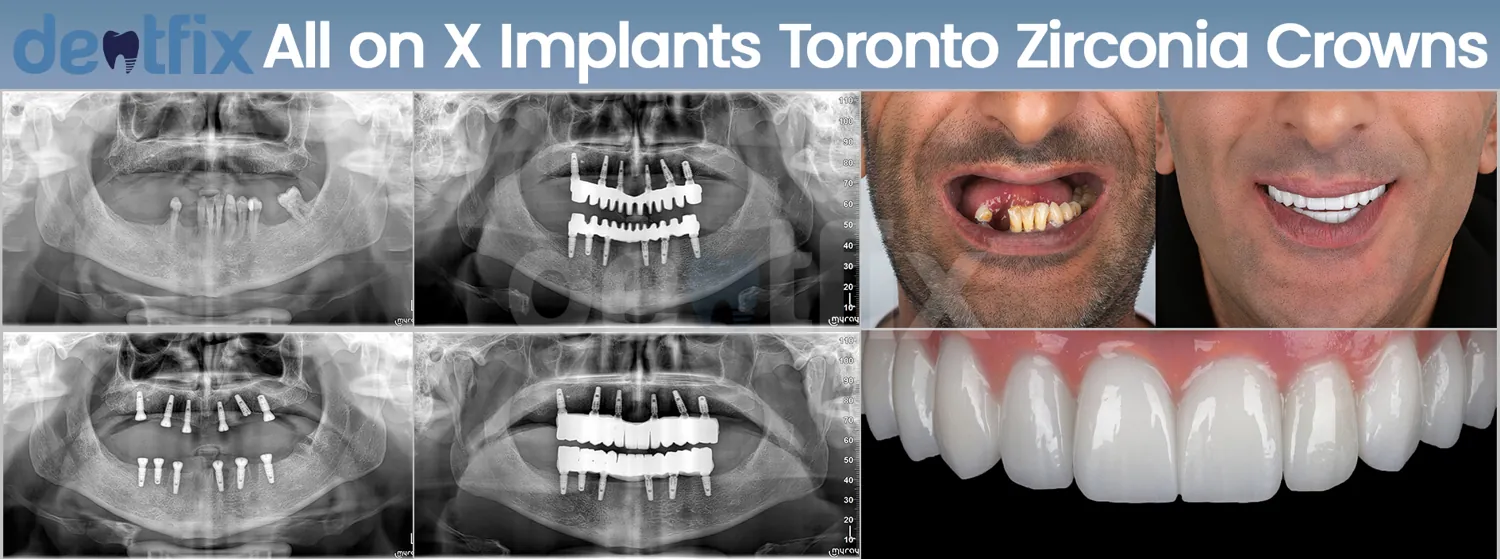
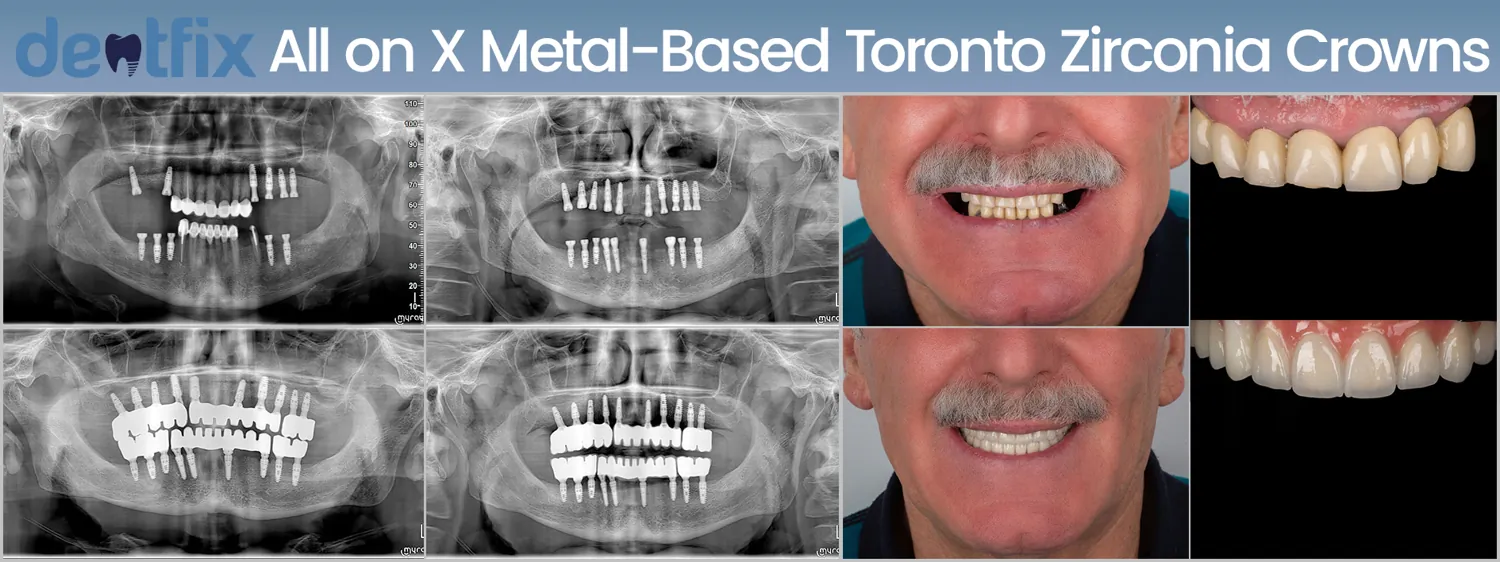
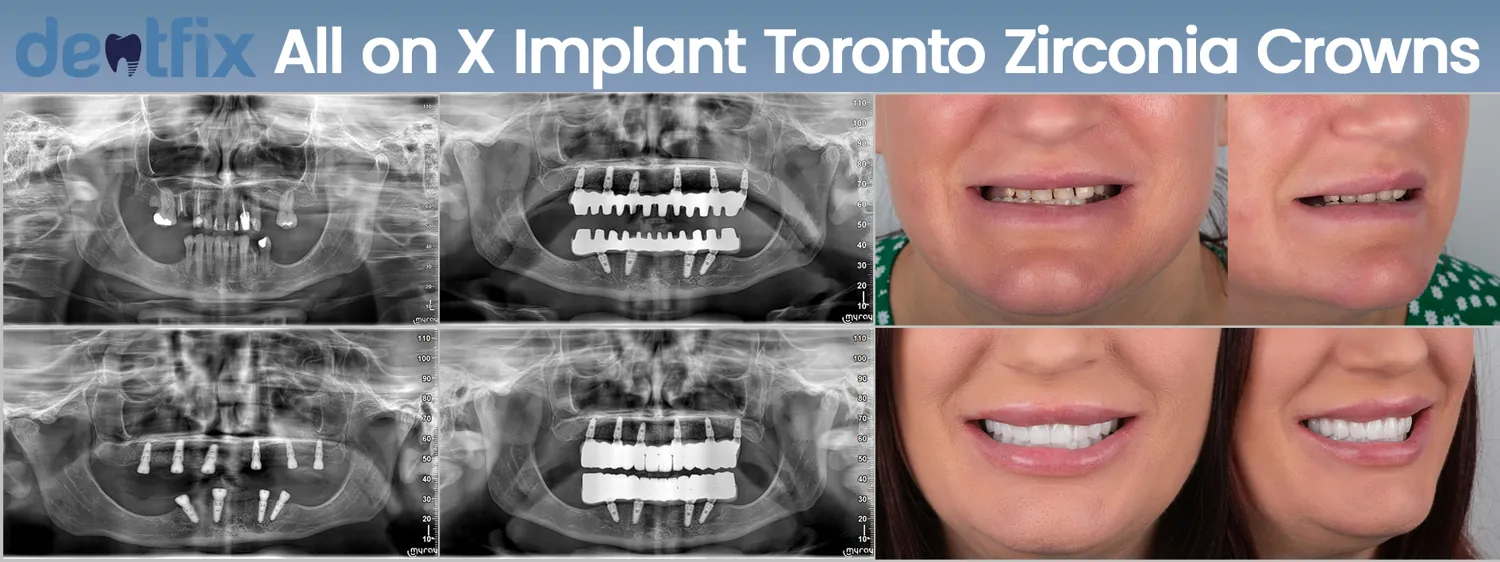
Step 5 — Final zirconia prosthesis. After approximately 4–6 months of healing you return for the final restoration. We frequently recommend a monolithic zirconia prosthesis with titanium-bar reinforcement — exceptional strength, aesthetics and long-term durability.
Why experience matters
Zygomatic implant surgery is considerably more complex than conventional implant treatment. Successful outcomes require advanced surgical knowledge, a detailed understanding of facial anatomy, digital planning, experience with complex full-mouth rehabilitation, and a multidisciplinary team of surgeons and prosthodontists. Choosing an experienced clinic significantly improves both safety and long-term success.
At Dentfix, every complex implant case is planned by our multidisciplinary team around personalized treatment planning, high-quality implant systems, digital diagnostics, international patient support and transparent communication. We understand that zygomatic treatment is often the last hope for patients who have struggled with dentures or been told implants were impossible — our goal is to restore not only your smile, but your confidence and quality of life.
Frequently asked questions
Are zygomatic implants painful?
Most patients report less discomfort than expected. Mild swelling and bruising are common during the first few days and are managed with medication and post-operative care instructions.
How long does the surgery take?
Duration depends on the complexity of the case. Full-arch rehabilitation with zygomatic implants may take several hours and is performed under appropriate anesthesia for patient comfort.
Are zygomatic implants safe?
Yes. When performed by experienced surgeons using modern planning techniques and appropriate patient selection, zygomatic implants have an excellent safety profile and are supported by decades of clinical evidence.
Will I need bone grafting?
In many cases, no. One of the primary advantages of zygomatic implants is that they often eliminate the need for extensive bone grafting.
How long do zygomatic implants last?
With proper oral hygiene, regular dental check-ups and professional maintenance, zygomatic implants are designed to provide long-term function and can last for many years.
Schedule your free online evaluation
If you have been told that you do not have enough bone for conventional dental implants, don't lose hope. Our experienced team at Dentfix can review your X-rays or CBCT scan and determine whether zygomatic implants are the right solution for you. Contact us today for a free online consultation — and discover how advanced implant dentistry can help you smile again with confidence.
References
Aparicio C, Manresa C, Francisco K, et al. Zygomatic implants: indications, techniques and outcomes, and the zygomatic success code. Periodontol 2000. 2014;66(1):41-58. doi:10.1111/prd.12038
Chrcanovic BR, Albrektsson T, Wennerberg A. Survival and complications of zygomatic implants: an updated systematic review. J Oral Maxillofac Surg. 2016;74(10):1949-1964. doi:10.1016/j.joms.2016.06.166